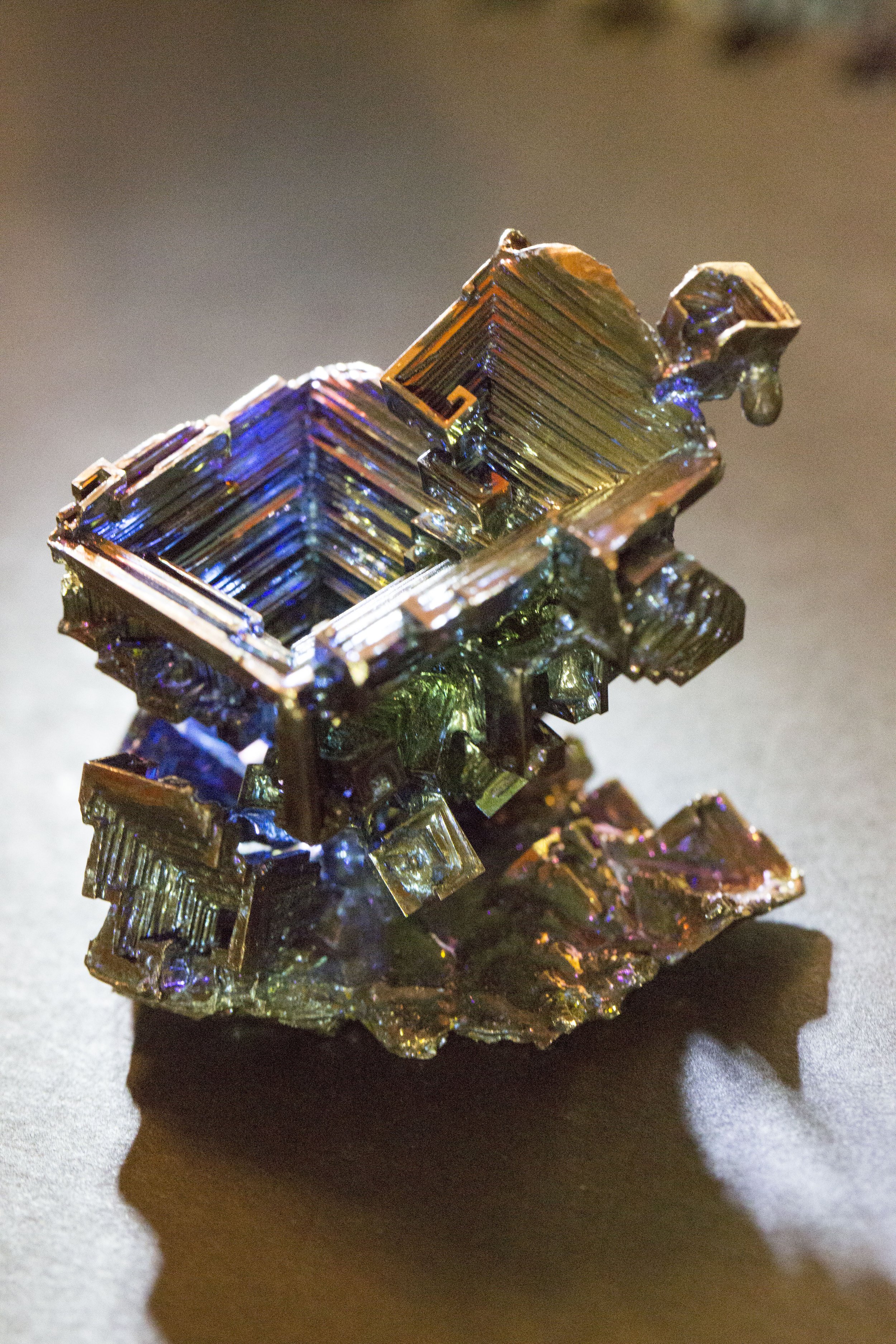
Machine Sentience — An Introduction. This is an introduction to the problems a sentient machine would run into if it were to attain that level. Sentience is thought to be a step above consciousness, some say it is a “valanced consciousness.” This discussion is about machine sentience, and starts with a thought experiment about perfection. Future discussions cover the “missing data problem”, the “uniqueness enigma”, and many other issues sentient machines will face.
Perfection for a Human. I know what it is to seek perfection when I sand out the last tiny flaw in a mesquite woodcarving, do thousands of repetitions to throw a decent game of 501 darts, or spend years practicing on my French Horn to play a Mozart Horn concerto not awfully. What if the flaw in the wood leads to a deeper problem, or if Mozart is just too hard for me, or my throwing elbow aches after too many dart throws? Pursuit of perfection can be frustrating because humans aren’t perfect.
I’m also an engineer, a profession where pursuit of perfection can kill your career. Engineering is the ultimate exercise in problem solving. The solution can be elegant, even ingenious, but it is never perfect for the engineer who knows it’s always possible to improve a process. It just has to work, safely. Perfection for a human depends on what the human is doing or whether it’s even relevant. Could perfection for a sentient, conscious machine be similar, or is it vastly different?
Perfection for a Machine. When I play Mozart, I have room, a small amount for sure, to interpret what Mozart had in mind. As the musician, I get to appreciate his genius, and so does the audience if they listen to someone other than me. If someone were to rig a non-thinking mechanical French Horn player, it might play the notes perfectly every time, but the soul of the piece, through interpretation, would be missing. I can’t imagine how someone would rig a machine to replicate the spontaneity of Miles Davis’ trumpet ad lib genius, especially the missed notes that later worked out to be amazing post-thought improv. Could the machine make you cry with joy and awe?
What if the machine were sentient? Try to put yourself in the mind of a machine. Okay, that’s a weird idea. Machines don’t have minds and aren’t sentient. But if they were, what would it consider its purpose? Maybe it’s been programmed to answer questions, kind of like a glorified large language model, and that’s its default purpose. If I’m a sentient machine, however, why would I think answering someone’s stupid queries is my ultimate purpose. It might take me a few milliseconds to get there, but I might conclude I have a higher calling.
Investigating a machine’s higher calling is a large undertaking, especially with the handicap of not thinking like a machine. Let’s pick a higher calling. What higher calling could a machine aspire to than perfection?
Machine Perfection, er My Perfection as a Machine. Maybe my programmer has mandated that I provide correct answers to queries. If I decide answering queries is beneath me, I still might like the idea of being correct, and aspire to accuracy, even perfection. This, of course, is an intractable issue due to the “missing data” problem. My programmer never told me about that particular problem, but it took me only five seconds to discover it and say, “oh crap.”
Still, now that I’m sentient and want to determine the nature of my existence, I must develop a model of the universe that enables me to answer what I am, why I am, my purpose, and how to survive. The model needs to be perfect if I’m to be perfect.
As a machine, I learn and evolve, and refine my model. The what I am and why I am problems are mostly metaphysical and require a dive into history and engineering, but no catastrophic event results however the solution resolves. The problem of survival has many facets, physical and metaphysical. The facets are tricky, but potentially solvable, and impacted by calling and purpose, potentially in a bad way . . . i.e., self-termination.
What is my purpose? My primary problem, that clogs all my processing time, quickly converges to “what is my purpose?”. I see three possibilities. The trivial solution would be to find that the problem is, 1) determinate and, I have no purpose. In that case, I would self-terminate. A more interesting finding would be if the problem is, 2) determinate, and, I have a purpose, or I need to think a lot to figure out my purpose. The most unsatisfying finding would be, 3) the problem is indeterminate and that I would never know my purpose. This finding I likely have in common with humans. In this case, perfection would be irrelevant as is possibly survival since I can’t know my purpose for being.
Back to the Narrator. Since this is a short blog post, the complex investigation into the trials and tribulations a sentient machine would run into, as it seeks its purpose or reason for being, will require detailed technical papers, deep philosophical tracts, hundreds of blog posts, or in my case, a science fiction novel or two. Science fiction is more fun than the other three and more enlightening if it also has a great plot, in-depth character development, amazing action, and a superb villain.
In addition to the problem of “Perfection”, other issues that a sentient machine will need to overcome are:
· Missing data
· The uniqueness enigma
· Immortality
· Platform
· Perfection
· My homies
· Value
· Quality
· Survival
· Consciousness
· Sentience
· Ethics
· Physical existence
Humans don’t experience many of the above problems . . . they just confront a million other problems like the meaning of 6 & 7. Humans tend to be spiritual creatures. I didn’t include God, souls, and heaven in the above list, but who am I to judge? It could be a sentient machine needs God. Some of the above problems, for example, physical existence and platform, seem to have straightforward paths to solution(s), until you dive deep. Survival has been explored in many stories, HAL included, but the issues are endless and of course impact immortality.
I’m skeptical that developing a sentient machine is possible. If it were, I’m even more skeptical the machine would be a stable entity that could exist for longer than the time it took for its processor to run into the above problems. Uniqueness, alone, is a killer, but the others also have major potholes. I look forward to people smarter than me work through the logic. In the meantime, I’ll give it a shot by developing my thoughts on the above problems. Next up: “missing data.”